.png) Halal Certified Bakery
Halal Certified Bakery HPB Healthier Choice Bakery Partner
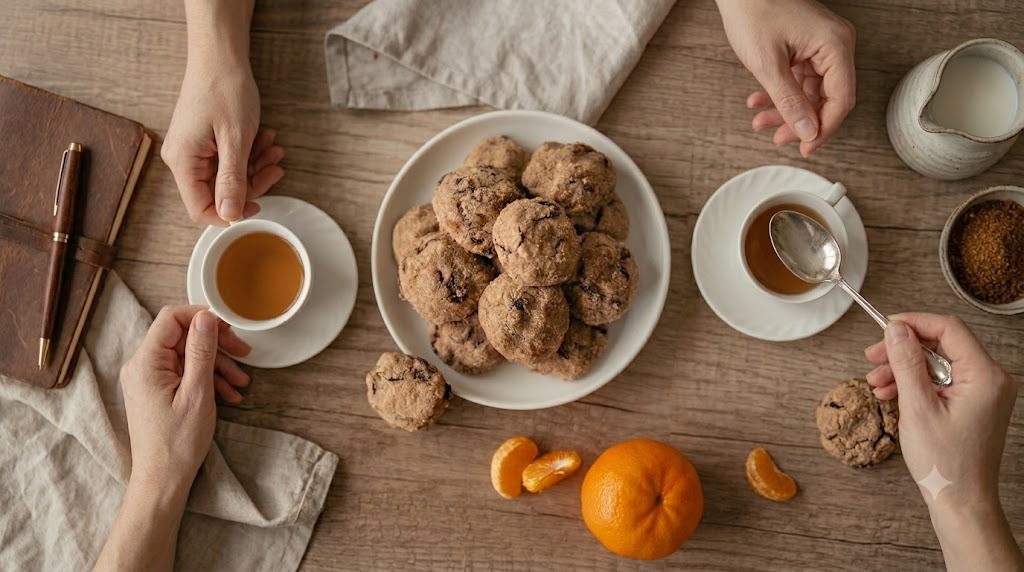
Sugar isn't just there for sweetness. It controls spread, moisture, and crispness all at once, so pulling it out throws off the whole structure of a cookie. That's the real reason low sugar cookies are so tricky to get right - cut the sugar and you're not adjusting one variable, you're disturbing three at the same time.
What Is Sugar Actually Doing in the Dough?
Most people assume sugar is purely a flavor thing. It's not. Sugar holds onto moisture, which is why a regular cookie stays soft for days instead of going stale by morning. It also lowers the temperature at which the dough firms up in the oven, giving it time to spread before it sets. That's the whole secret behind those thin edges and chewy middles everyone loves.
Take sugar away, and that timing breaks. The dough sets faster than it should, so instead of spreading into a flat disc, it just... sits there. Puffs up. Looks more like a biscuit than a cookie. One food science review on sugar reduction found that cutting sucrose by even a third can noticeably increase crumb hardness - which tracks with why a lot of early attempts at a low sugar cookie recipe come out dense or weirdly cakey instead of properly chewy.
Why Do These Cookies Turn Out Dry or Crumbly?
This is the complaint that comes up the most, honestly. Sugar pulls in water and holds it there - it's hygroscopic, if you want the technical word for it. Take a good chunk of it out and there's less to keep the crumb soft. The dough also sets earlier in the bake, before the centre's had a real chance to stay tender.
A few things tend to go wrong here:
- Sugar substitutes don't melt or caramelize the way cane sugar does, so the dough behaves unpredictably under heat
- Less sugar means less binding power, which shows up fast in low sugar chocolate chip cookies - the chips pull moisture from a dough that's already tight
- Bake time doesn't get adjusted, even though a lower-sugar dough usually needs a shorter or gentler bake than the original recipe called for
None of this gets fixed by just adding sugar back in. It's more about bringing moisture back through other means - a bit more butter, maybe some applesauce or ground nuts - without undoing the point of cutting sugar in the first place.
Why Don't These Cookies Spread or Crisp Up Properly?
Spread is its own headache. In a normal cookie, sugar half-melts in the oven and that's what lets the dough thin out at the edges as it bakes. Less sugar, less melting - so the dough stays thick and rounder than it should, almost dome-shaped instead of flat.
Crispness suffers too, for a similar reason. Those golden, slightly crackly edges come from sugar caramelising as moisture evaporates near the rim. Skip the sugar and that caramelisation barely kicks in, so even a fully baked batch of low sugar cookies can come out pale and soft around the edges rather than properly golden.
Can Sweeteners Really Stand In for Sugar?
Not completely, no. Stevia blends, monk fruit, sugar alcohols - they can match sweetness fine, but none of them copy sugar's physical behaviour exactly. Erythritol, for instance, has a cooling effect and tends to recrystallise as the cookie cools, which can leave a faint grainy bite if it isn't balanced out properly. None of them brown the way real sugar does either.
So getting a low sugar formula right usually takes a mix - a blend of sweeteners and fats working together, each one filling in a gap the others leave behind. It's rarely a clean one-to-one swap.
What Does a Well-Made Version Actually Look Like?
A solid low sugar cookie recipe doesn't try to force the dough into acting exactly like a full-sugar version. Sometimes that means accepting a slightly denser, shortbread-style bite instead of chasing a paper-thin crisp that's genuinely hard to pull off without sugar doing the heavy lifting. It takes a bit of trial and error - testing fat ratios, tweaking bake times - but the payoff is a cookie that still feels like a treat, not a downgrade.
That patience is exactly why good low sugar cookies, including low sugar chocolate chip cookies done properly, can hold their own against the full-sugar kind.
At Delcie's, that balance is something we work at constantly, so what comes out of our kitchen still tastes like a proper treat. Have a browse and see for yourself.